Whey concentrate guide
Protein powder label: scoop weight vs grams of protein
A protein scoop is not all protein. How to find the protein share of a scoop, read the ingredients, spot amino spiking, and compare price per 25 g of protein.
Protein powder labels are full of numbers, and the biggest one on the front is often not the protein. A tub may say "5 lb", "74 servings" and "30 g" in large print. Only one line on the back tells you how much protein you get, and it takes one division to make it useful.
Where is the protein on the label?
Protein powders are sold either as foods, with a Nutrition Facts panel, or as dietary supplements, with a Supplement Facts panel. Both show:
- Serving size, in scoops and in grams of powder (for example, "1 scoop (33 g)").
- Servings per container, often "about" a number, since powder settles.
- Protein, in grams per serving.
The FDA nutrition labeling rule (21 CFR 101.9) says protein is stated in grams per serving, to the nearest gram. A percent Daily Value for protein is optional unless the product makes a protein claim (or is made for infants or children 1 to 3), and when it is shown it is based on protein corrected for quality, so a %DV next to protein can be lower than the grams alone would suggest.
What share of the scoop is protein?
Divide grams of protein by the grams of powder per serving.
| Serving | Protein | Protein share | Typical of |
|---|---|---|---|
| 31 g | 25 g | about 81% | Unflavored concentrate, high end |
| 33 g | 25 g | about 76% | Unflavored concentrate |
| 30 g | 27 g | 90% | Isolate |
| 45 g | 24 g | about 53% | Heavily flavored, or with added carbs |
Rounded examples, not specific products.
The rest of a whey concentrate scoop is mostly lactose, fat and minerals, plus any flavoring, sweetener and thickener. None of that is bad, but it means a bigger scoop does not mean more protein. It also means flavored and unflavored versions of the same product can differ in protein per scoop, so check the label for the flavor you buy.
What does the ingredient list tell you?
Ingredients are listed in order of weight. For a whey protein:
- The first ingredient should be a whey protein. "Whey protein concentrate", "whey protein isolate" or a named "protein blend" of them.
- A "protein blend" lists its parts in order too. If concentrate comes first, the blend is mostly concentrate, whatever the front of the tub emphasizes.
- Added amino acids. Glycine, taurine, creatine, L-glutamine or "amino acid blend" high in the list deserve a closer look (see below).
- Flavor and sweetener. Cocoa, natural flavors, sucralose, stevia and gums take up some of the scoop.
See how to read a Supplement Facts label for the general rules, and proprietary blends explained for what a blend is allowed to hide.
What is amino spiking?
US rules let labels calculate protein from nitrogen, in most cases as 6.25 times the nitrogen content. Protein contains nitrogen, but so do free amino acids like glycine and taurine, which are much cheaper than whey. Adding them raises the protein number on the label without adding the complete protein that whey provides.
This is not only a historical worry. A 2025 laboratory study of 34 whey protein powders sold in India found taurine-based nitrogen spiking in 89% of the 18 medical-pharmaceutical powders it tested, against 12.5% of the 16 nutraceutical (fitness) powders, which mostly matched their protein claims. The nutraceutical powders averaged about 76 g of protein per 100 g. It was one country and one set of products, but it shows why the ingredient list matters.
What to do: if a free amino acid appears high in the ingredients of a product sold as protein, the protein number may include it. Programs such as USP Verified and NSF check that the label matches the contents, and a seal only counts if the exact product appears in the certifier's own database; see third-party tested supplements.
How do you turn the label into a price?
- Protein per serving times servings per container gives total protein.
- Price divided by total protein gives the price per gram.
- Multiply by 25 for the price per 25 g of protein.
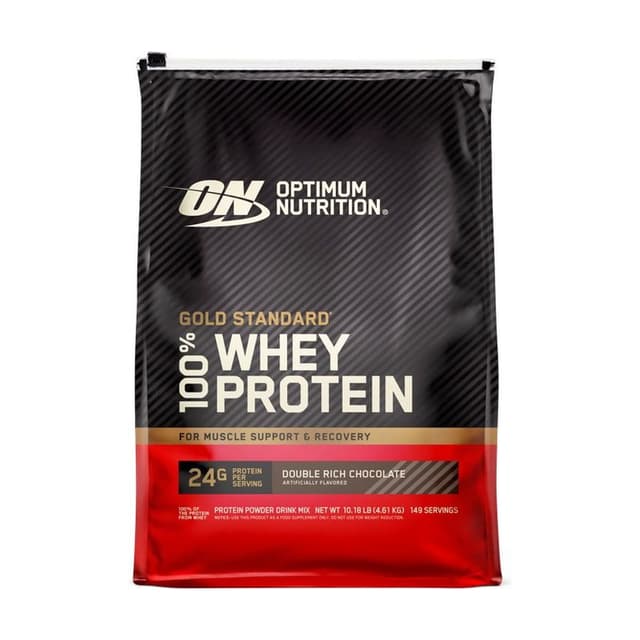
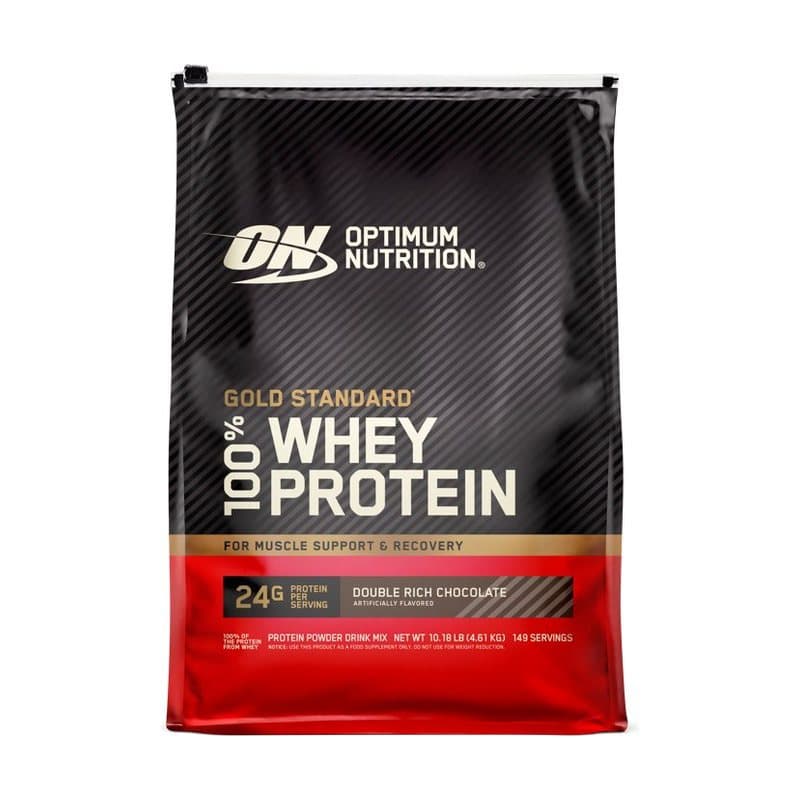
Our whey concentrate list does this for every tub, using the protein on the label rather than the scoop weight. Here are today's cheapest:
Prices change daily. The full whey concentrate list shows every product we track, where it is sold, and when the price was last checked. Nothing is ranked by commission.
For a worked example, see the cheapest whey protein per 25 g. For isolate, see the whey isolate list and isolate vs concentrate.
How much protein per serving is normal?
Most whey servings hold 20 to 30 g of protein. The International Society of Sports Nutrition gives general recommendations of 0.25 g of high-quality protein per kg of body weight per meal, or an absolute 20 to 40 g, for people who exercise. More per scoop is not automatically better value; the price per gram is what counts.
Frequently asked questions
Why is my 30 g scoop only 24 g of protein?
The scoop is powder. The rest is lactose, fat, minerals and, in flavored powders, flavor and sweetener. Divide protein by scoop weight to see the protein share.
What is a good protein percentage for whey?
Plain whey concentrate is usually about 70 to 80% protein by weight, and isolate is 90% or more. A flavored product well below 70% has a lot of non-protein ingredients.
How can I tell if a protein powder is amino spiked?
Read the ingredient list. Free amino acids such as glycine or taurine near the top of a product sold as protein may be counted in the protein number, because protein on US labels may be calculated from nitrogen. Third-party programs such as USP Verified and NSF check that the label matches the contents.
Does percent Daily Value for protein matter?
It is optional on most labels and, when shown, is adjusted for protein quality. The grams of protein per serving is the more useful number for comparing products.
Sources
Every price on the list is worked out the same way, and checked daily.
See the whey concentrate price comparisonCheaper alternatives to Orgain whey concentrateOrgain vs Optimum Nutrition whey concentrate
This is general information about prices and labels, not medical advice. Ask a doctor or pharmacist before starting a supplement, especially if you are pregnant, take medication, or have a health condition. These statements have not been evaluated by the Food and Drug Administration, and no supplement here is intended to diagnose, treat, cure, or prevent any disease. We don't sell the products; how we make money.