Whey concentrate guide
Cheapest whey protein: price per 25 g of protein
The cheapest whey protein has the lowest price per gram of protein. How to work it out from the label, why scoop size misleads, and which tubs cost least now.
Whey protein is sold by the pound, by the scoop and by the "serving", and none of those tell you what you pay for the protein itself. Two tubs of the same weight can hold different amounts of protein, and two brands can define a serving in different ways. Our whey concentrate list divides each package price across the protein in the tub and shows the price per 25 g of protein.
What is the cheapest whey protein right now?
Here are the lowest prices per 25 g of protein on our whey concentrate list:
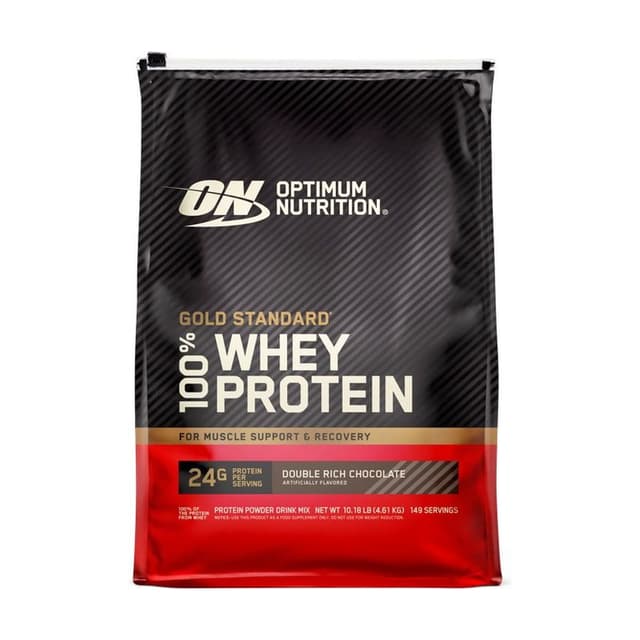
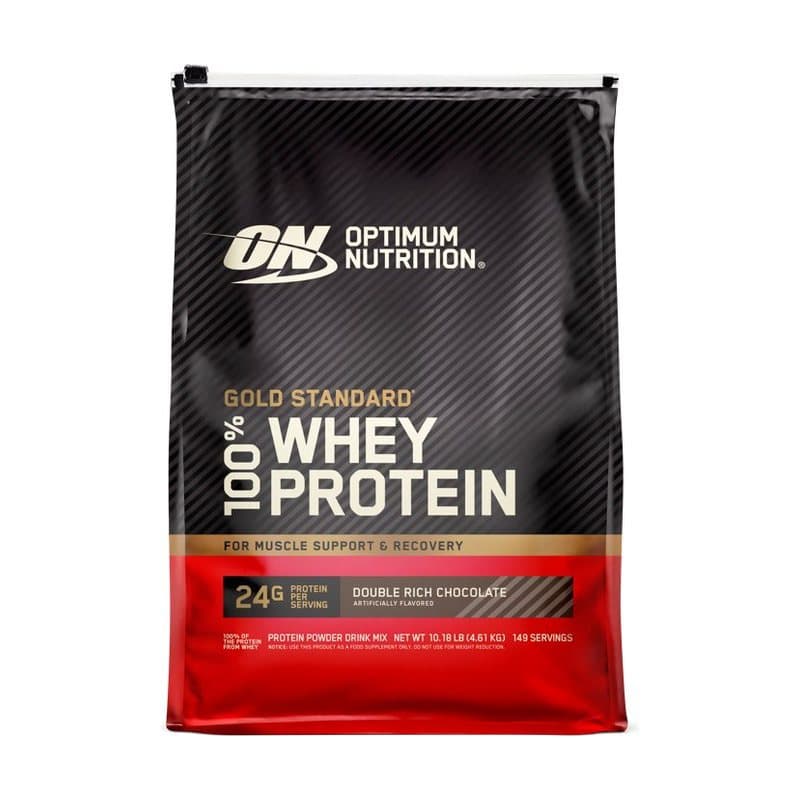
As of the November 1, 2026 price check, the cheapest per 25 g on the list was Optimum Nutrition Gold Standard 100% Whey in its 10.18 lb size, with Muscle Feast's unflavored 5 lb bag and ProMix's unflavored bag close behind. The biggest Gold Standard size is cheaper per gram than its smaller tubs, which is why it ranks so high. Optimum Nutrition says Gold Standard uses whey protein isolate as its primary protein source, so it is a blend rather than plain concentrate.
Prices change daily. The full whey concentrate list shows every product we track, where it is sold, and when the price was last checked. Nothing is ranked by commission. Tubs that are 100% isolate have their own whey isolate list.
How do you work out the price per 25 g of protein?
You need three numbers from the label: the price, the grams of protein per serving, and the servings per container.
- Multiply protein per serving by servings per container. That is the total protein in the tub.
- Divide the price by the total protein. That is the price per gram of protein.
- Multiply by 25 for the price per 25 g.
A worked example with round, made-up numbers: a tub with 25 g of protein per serving and 30 servings holds 750 g of protein. At $30, that is 4 cents per gram, or $1.00 per 25 g of protein. A second tub at $27 with 24 g of protein and 25 servings holds 600 g of protein, which works out to 4.5 cents per gram, or about $1.13 per 25 g. The cheaper tub on the shelf is the more expensive protein.
The same method runs across every list on the site. See how it works and why prices are per serving.
Why is scoop size misleading?
A scoop is a volume of powder, not an amount of protein. Whey concentrate is not pure protein: the rest of the powder is lactose, fat and minerals, plus any flavor and sweetener. Flavored powders carry more non-protein weight than unflavored ones, so the same scoop can hold less protein.
| Label says | Protein share of the scoop | What it tells you |
|---|---|---|
| 25 g protein per 31 g scoop | about 81% | Mostly protein, little else |
| 25 g protein per 33 g scoop | about 76% | A little more non-protein weight |
| 24 g protein per 40 g scoop | about 60% | A lot of flavor, sugar or filler |
Rounded, made-up examples. Divide protein by serving weight on any label to get the share.
Brands state protein per serving, and that is the number to use. Optimum Nutrition's product page, for example, states 24 g of protein per serving of Gold Standard 100% Whey. Some brands define a serving as two scoops. That is fine, as long as you compare protein per serving and servings per tub rather than counting scoops.
Is unflavored or flavored whey cheaper?
Unflavored powder puts more protein in every gram of powder, and on our list several of the cheapest options per 25 g are unflavored bags. But flavor is not the deciding factor. Size is.
- Bigger containers. A 5 lb or 10 lb container usually costs less per gram of protein than a 2 lb tub from the same brand.
- Less processing. Concentrate is filtered less than isolate, so it usually costs less per gram of protein.
- Store and size, not brand. A well-known brand in its largest size can beat a budget brand in a small bag.
Unflavored whey tastes mildly of milk. Many people mix it into oats, yogurt, smoothies or coffee, where the taste disappears.
What should you check before buying the cheapest tub?
- Protein per serving. Use the number on the Nutrition Facts or Supplement Facts panel, together with servings per container.
- The ingredient list. Whey should come first. If you see added free amino acids such as glycine, taurine or creatine near the top, the protein number may include nitrogen that is not whey protein, because US rules let protein be calculated from total nitrogen content.
- Third-party testing. Athletes in tested sports should look for NSF Certified for Sport or Informed Sport. See how to tell if a supplement is third-party tested.
- Lactose. Concentrate keeps more lactose than isolate. If that bothers you, see whey isolate vs concentrate.
How much protein do you actually need?
For building and keeping muscle, the International Society of Sports Nutrition says a total of 1.4 to 2.0 g of protein per kg of body weight per day, from all foods, is enough for most people who exercise. The NIH Office of Dietary Supplements notes no safety concerns reported for athletes at intakes up to about 2.0 g/kg per day. Powder is a convenient way to fill a gap, not a requirement. Ask a doctor first if you have kidney disease or have been told to limit protein.
Frequently asked questions
What is the cheapest way to buy whey protein?
Usually the largest container you will finish before it expires. Compare by price per 25 g of protein, since that accounts for scoop size, serving definitions and container size.
Is cheap whey protein lower quality?
Not necessarily. Whey is a complete protein. Price mostly reflects flavor, brand, packaging, container size and testing. Check the label for added free amino acids and look for a third-party testing mark if that matters to you.
How many grams of protein are in a scoop of whey?
It depends on the product and the scoop size. The label states protein per serving; Optimum Nutrition Gold Standard, for example, states 24 g.
Is whey concentrate or isolate cheaper?
Concentrate is usually cheaper per gram of protein. Isolate is filtered further to remove more lactose and fat, which adds cost.
Sources
- ISSN position stand: protein and exercise (Jäger et al., 2017) (opens in a new tab)
- NIH Office of Dietary Supplements: Dietary Supplements for Exercise and Athletic Performance (opens in a new tab)
- 21 CFR 101.9: nutrition labeling of food (protein declaration) (opens in a new tab)
- Optimum Nutrition Gold Standard 100% Whey product page (opens in a new tab)
Every price on the list is worked out the same way, and checked daily.
See the whey concentrate price comparisonCheaper alternatives to Orgain whey concentrateOrgain vs Optimum Nutrition whey concentrate
This is general information about prices and labels, not medical advice. Ask a doctor or pharmacist before starting a supplement, especially if you are pregnant, take medication, or have a health condition. These statements have not been evaluated by the Food and Drug Administration, and no supplement here is intended to diagnose, treat, cure, or prevent any disease. We don't sell the products; how we make money.