Buying guide
How to read a Supplement Facts label: serving size, elemental amounts and blends
A guide to the back of the bottle: serving size, % Daily Value, the 'as' in parentheses, proprietary blends, and traps that make cheap look expensive.
The front of a supplement bottle is marketing. The back is regulated. In the US, dietary supplements must carry a Supplement Facts panel laid out under FDA rules, and nearly every useful fact about value and dose is in it.
1. Serving size and servings per container
The first line says what one serving is: 1 capsule, 2 softgels, 1 scoop (30 g). Everything below it is per that serving.
This is where many price comparisons go wrong. A bottle of 120 capsules with a serving size of 4 capsules is 30 servings, not 120. A "high potency" product often gets its big number by making the serving several pills.
2. Amount per serving and % Daily Value
Each row lists an ingredient, the amount per serving, and the % Daily Value (%DV) when one exists. The %DV compares the amount to a reference intake set by the FDA for labels. It is not a recommendation to take 100%, and many supplements exceed it. Ingredients without an official Daily Value, such as creatine or fish oil fatty acids, show a symbol instead of a percentage.
3. The form in parentheses, and elemental amounts
For minerals, the row names the mineral and gives the form in parentheses:
Magnesium (as magnesium bisglycinate) 200 mg
For minerals, the amount on that line is the mineral itself, the elemental amount, not the weight of the whole compound. That matters, because the compound can be much heavier than the mineral inside it:
| Ingredient | Mineral share of the compound (approx.) |
|---|---|
| Magnesium oxide | 60% |
| Magnesium glycinate | 14% |
| Zinc oxide | 80% |
| Zinc gluconate | 14% |
| Zinc glycinate | 20–30% |
Approximate figures. The Supplement Facts panel states the actual amount.
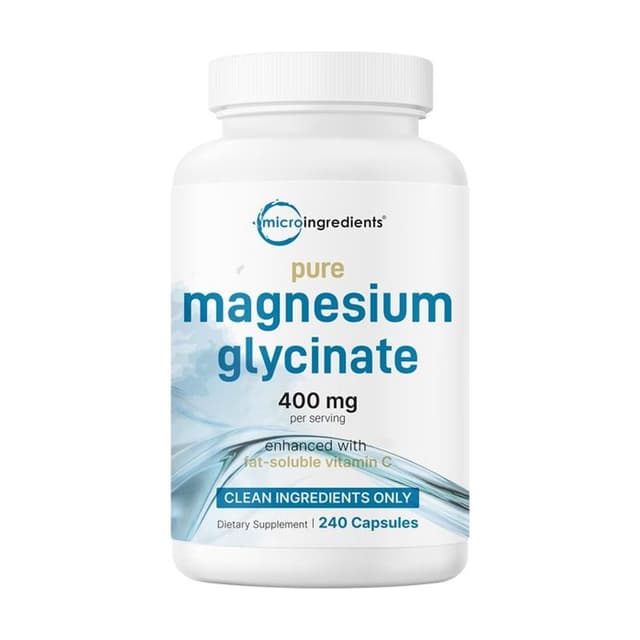
So when the front says "Magnesium Glycinate 500 mg", that is often the compound, about 70 mg of magnesium. The back tells you which. More in magnesium glycinate label math.
Two parentheses to watch: a blend of forms, like (as magnesium bisglycinate, magnesium oxide), means the product is mixed, and the cheaper form may be the bigger share.
4. Numbers that describe the whole, not the active part
Some products list the total weight of an ingredient that is only partly active:
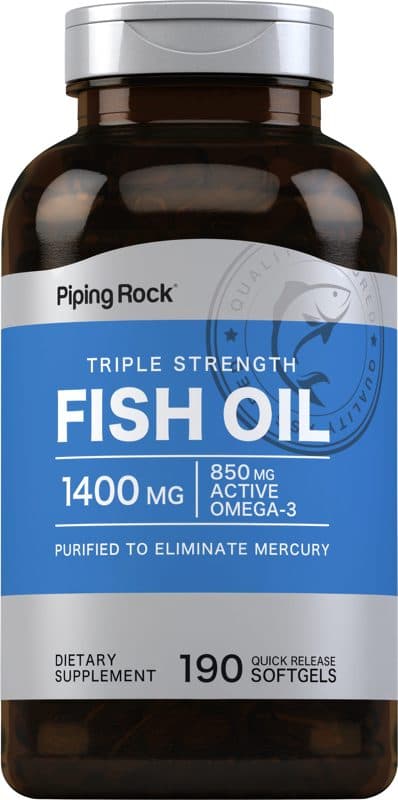
- Fish oil: "1,000 mg fish oil" usually contains about 300 mg of EPA + DHA. Look for EPA and DHA listed separately. See how to read EPA + DHA.
- Protein powder: a 40 g scoop might hold 24 g of protein. The protein line is what counts.
- Psyllium: the fiber line, not the powder weight.
- Vitamin D: shown in mcg and often IU. 1 mcg = 40 IU.
5. Proprietary blends
A proprietary blend lists a total weight for a group of ingredients and names them in descending order by weight, but it does not have to say how much of each one is inside. A 1,500 mg "sleep matrix" might be mostly the cheapest ingredient. If you care about the dose of a specific ingredient, a blend usually cannot tell you. See proprietary blends explained.
6. Other ingredients
Below the panel is the list of other ingredients: capsule material, fillers, flow agents, sweeteners, colors, and allergens. This is where you find gelatin (not vegetarian), sugar alcohols (gas for some people), or sucralose.
7. Turn it into a price per serving
Once you know the real amount of the active ingredient per container, the fair comparison is:
price ÷ (total active ingredient ÷ one serving)
That is how every one of our price lists works, from creatine per 5 g to magnesium per 100 mg elemental. The full method is on how it works, and the reasoning is in how to compare supplement prices per serving.
What the label does not tell you
The FDA does not approve dietary supplements before they are sold, and a label can be wrong. Third-party programs such as USP Verified, NSF and Informed Sport check that contents match the label. See how to tell if a supplement is third-party tested.
Frequently asked questions
What does "as" mean on a supplement label?
It names the chemical form of the ingredient. "Zinc (as zinc bisglycinate) 15 mg" means 15 mg of zinc delivered as zinc bisglycinate.
Is the mg on a mineral label elemental?
On the Supplement Facts panel, yes: the amount next to a mineral is the mineral itself. The front label may show the compound weight instead, so check the back.
What does % Daily Value mean on a supplement?
It compares the amount per serving to a reference intake the FDA uses for labels. It is not a dosing recommendation.
How do I know how many servings are in a bottle?
Read "servings per container" and check the serving size. A 120-count bottle with a 4-capsule serving is 30 servings.
Sources
This is general information about prices and labels, not medical advice. Ask a doctor or pharmacist before starting a supplement, especially if you are pregnant, take medication, or have a health condition. These statements have not been evaluated by the Food and Drug Administration, and no supplement here is intended to diagnose, treat, cure, or prevent any disease. We don't sell the products; how we make money.