Buying guide
Proprietary blends: what a supplement label can hide
A proprietary blend lists a total weight but not how much of each ingredient is inside. What US label rules require and how to estimate the dose.
How the rule works
Under FDA labeling rules for dietary supplements, a proprietary blend can appear on the Supplement Facts panel as:
- the blend's name,
- the total weight of the blend,
- and the ingredients in order from most to least by weight.
Individual amounts are optional. The blend's weight is the total of those "other" ingredients only.
There is one important limit. Vitamins, minerals and other nutrients that have a Daily Value must still be declared with their own amounts, even when they are part of a blend. What can hide inside a blend without amounts is everything else: botanicals, amino acids, herbal extracts and similar ingredients.
Why brands use blends
The stated reason is protecting a formula from copycats. The practical effect is that a buyer cannot check doses. That makes it easy to:
- include a trendy ingredient at a token amount ("fairy dusting"),
- make a long ingredient list look impressive,
- use more of a cheap ingredient and less of an expensive one.
Blends show up often in sleep formulas, pre-workouts, "hair, skin and nails" products and greens powders. A common complaint on Reddit is that these are exactly the products where you most want to know the dose.
How to judge a blend
- Do the math on the limits. Because the order is by weight, the first ingredient is at least the blend weight divided by the number of ingredients. The second is at most half the blend, the third at most a third, and so on. If a 500 mg blend lists five ingredients, the first holds at least 100 mg, and the last could be almost nothing.
- Compare to the dose studied. If research used 300 mg of an ingredient and it sits second in a 400 mg blend, it can hold at most 200 mg. Only the first ingredient could reach 300 mg, and only if the others share the last 100 mg.
- Check the headline ingredient's position. If the ingredient on the front of the bottle is fourth or fifth in the blend, there is not much of it.
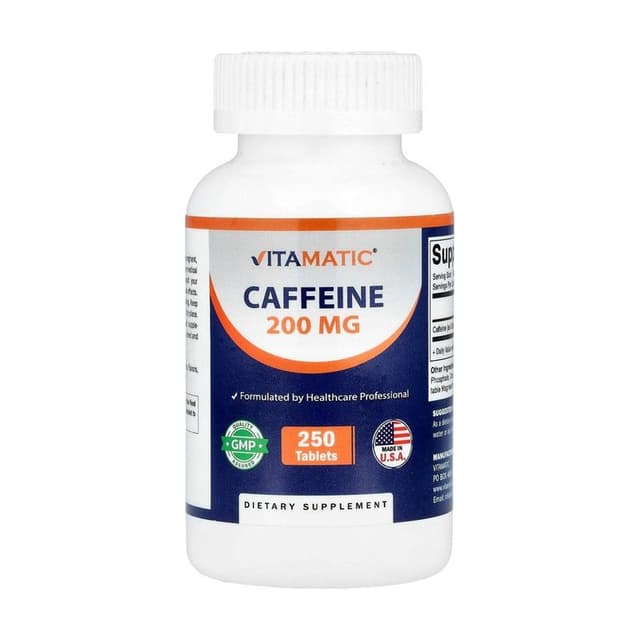
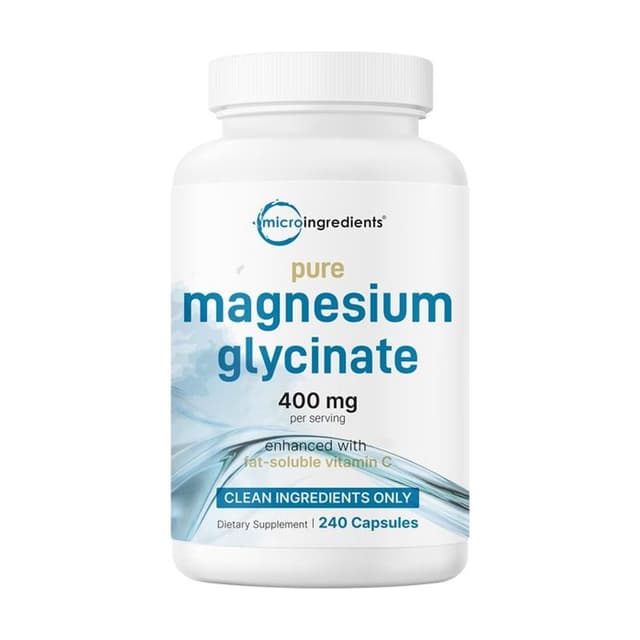
- Buy single ingredients instead. Magnesium glycinate, melatonin, L-theanine or caffeine bought separately let you see and set every dose, and you can compare the cost per serving directly. Our lists price single ingredients per serving, for example magnesium, melatonin, L-theanine and caffeine.
| Position in a 500 mg blend of 5 | Most it can be | Least it can be |
|---|---|---|
| 1st | just under 500 mg | 100 mg |
| 2nd | 250 mg | close to 0 |
| 3rd | about 167 mg | close to 0 |
| 5th | 100 mg | close to 0 |
Worked from the descending-order rule. The real amounts are unknown unless the brand states them.
An example
A "sleep blend" might read:
Proprietary Sleep Blend 750 mg: L-theanine, GABA, chamomile extract, lemon balm extract, melatonin
From that you know L-theanine is the largest ingredient and melatonin the smallest. L-theanine holds at least 150 mg, but you cannot tell whether it is 150 mg or 600 mg. Melatonin could be 0.3 mg or 5 mg, a range that matters for next-day grogginess. If you want 200 mg of L-theanine and 0.5 mg of melatonin, single products give you both, labeled. See melatonin dose and caffeine and L-theanine.
Now add magnesium to that formula. Magnesium has a Daily Value, so it should get its own line with an amount, outside the blend total. Read the whole panel before assuming everything is hidden. For minerals, also check that the amount is elemental: see magnesium glycinate label math.
When a blend is fine
A blend is not automatically bad. If you like how a product works and the total cost is reasonable, the missing numbers may not matter to you. And a few brands publish full amounts even for blended formulas. The problem is only when you are paying for a specific dose you cannot verify.
For reading the rest of the panel, see how to read a Supplement Facts label.
Frequently asked questions
What is a proprietary blend on a supplement?
A group of ingredients listed under one name with a total weight, in descending order by weight, without the amount of each ingredient.
Are proprietary blends legal?
Yes. FDA rules allow them, as long as the total weight and the ingredients in descending order are listed.
Are proprietary blends bad?
Not always, but they make it impossible to check doses. They can hide small amounts of expensive ingredients.
How can I tell how much of an ingredient is in a blend?
You can only estimate from its position and the total weight. The first ingredient is at least the blend weight divided by the number of ingredients, and the second is at most half the blend.
Do vitamins and minerals have to be listed inside a blend?
Yes. Nutrients that have a Daily Value, such as vitamins and minerals, must be declared with their own amounts even when they are part of a blend.
Sources
This is general information about prices and labels, not medical advice. Ask a doctor or pharmacist before starting a supplement, especially if you are pregnant, take medication, or have a health condition. These statements have not been evaluated by the Food and Drug Administration, and no supplement here is intended to diagnose, treat, cure, or prevent any disease. We don't sell the products; how we make money.