Ashwagandha (KSM-66) guide
KSM-66 vs ashwagandha root powder: dose and cost
KSM-66 is a branded root extract and root powder is plain ground root. What that means for dose, what the trials used, and how to compare prices.
Ashwagandha labels mix three different things under one name: branded extracts such as KSM-66, generic extracts with a stated withanolide percentage, and plain root powder. They look alike on a shelf. They are not alike in a capsule.
What is KSM-66?
KSM-66 is an ashwagandha extract sold by Ixoreal. The maker says it is a root-only extract, with no leaves added, made without alcohol or any other chemical solvent. Many supplement brands buy it and put it in their own capsules and gummies, so "KSM-66" on a label tells you which extract is inside, not who made the bottle.
Other branded extracts exist too, some made from root and leaf. They are different ingredients with their own studies, and they are not interchangeable with KSM-66 milligram for milligram.
What is ashwagandha root powder?
Root powder is the dried root, ground, with nothing taken out. It is the traditional form. It is usually cheaper per gram than an extract, but a gram of powder carries less of the plant's compounds than a gram of concentrated extract. Powder labels often do not state how much of those compounds is present.
Which form did studies use?
The trials people quote most often used root extracts in capsules:
| Study | Extract | Daily dose | Length | People |
|---|---|---|---|---|
| Chandrasekhar et al., 2012 | Full-spectrum root extract | 600 mg (300 mg twice) | 60 days | 64 adults with chronic stress |
| Salve et al., 2019 | Root extract | 250 mg or 600 mg | 8 weeks | 60 stressed, otherwise healthy adults |
| Cheah et al., 2021 (meta-analysis, sleep) | Various extracts | Clearer effect at 600 mg or more | 5 trials | 400 adults |
Summarized from the papers cited below.
These trials used extracts, not plain powder. They were small, mostly about two months long, and measured self-rated stress or sleep. The sleep meta-analysis also found the effect looked larger at 8 weeks or more, and said data on serious side effects are limited. If you want to follow what a trial did, the practical choice is an extract at the dose the trial used.
Is root powder a cheaper way to get the same thing?
Not in any way you can check from the label. Powder costs less per gram, but you would need more of it, and without a stated compound level you cannot say how much more. Comparing a 600 mg powder capsule to a 600 mg KSM-66 capsule on price alone compares two different products.
That is also why our list keeps to one extract. Pricing KSM-66 against KSM-66 means "per 600 mg" means the same thing on every row.
What does KSM-66 cost per 600 mg?
Today's cheapest KSM-66 capsules and tablets per 600 mg:
| Product | Store | Per 600 mg KSM-66 |
|---|---|---|
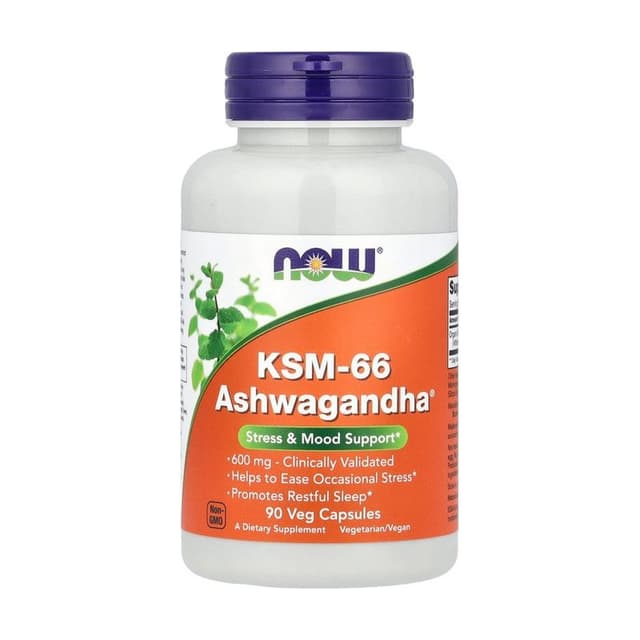
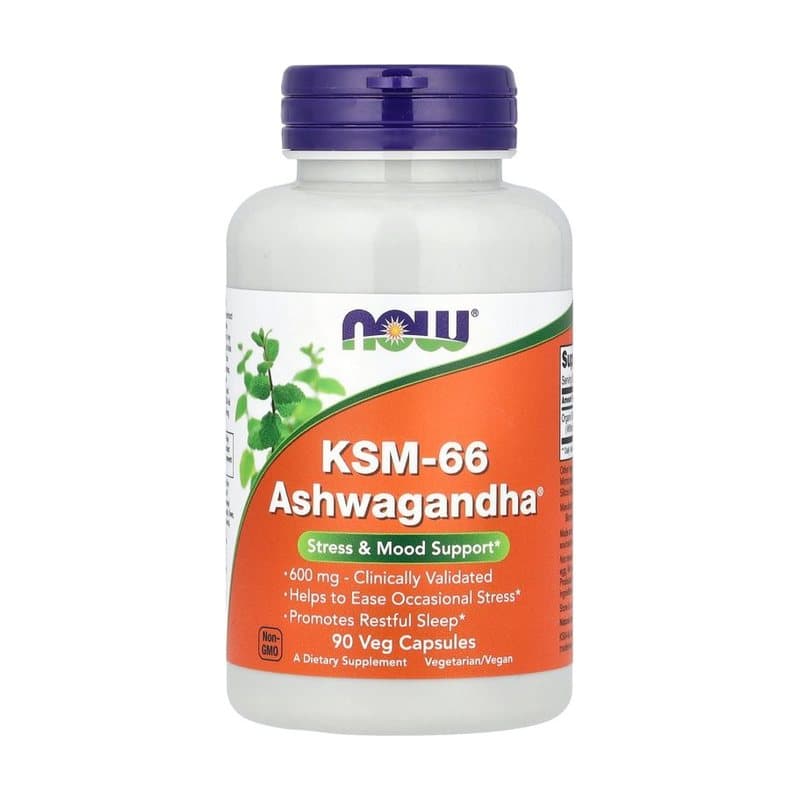
| NOW Foods KSM-66 Ashwagandha · 600 mg · 90 Veg Capsules | Vitacost | $0.21 |
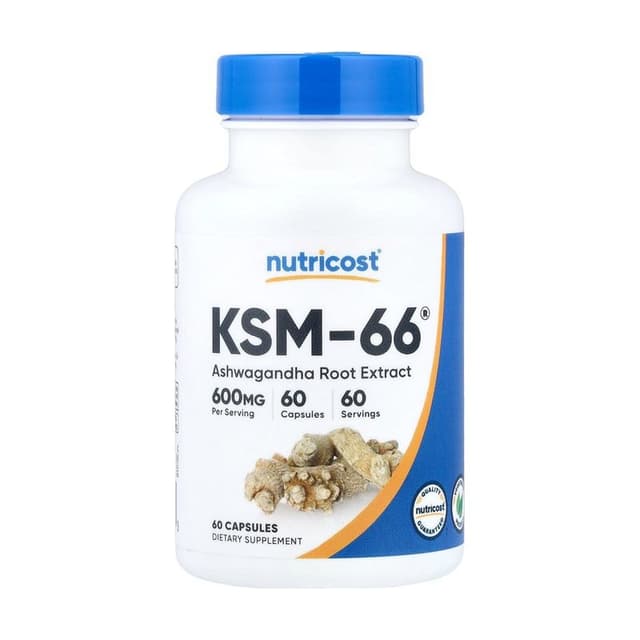
| Nutricost KSM-66, Ashwagandha Root Extract · 60 Capsules | Vitacost | $0.27 |
| Transparent Labs KSM-66 Ashwagandha · 60 Servings | Transparent Labs | $0.33 |
| Vitamatic KSM-66 · 60 Vegetable Capsules | Vitacost | $0.33 |
| Double Wood KSM66 Ashwagandha · 120 Capsules | Vitacost | $0.34 |
Prices checked November 7, 2026. Store prices change; the price at checkout is final. See the full ashwagandha list
Prices change daily. The full ashwagandha list shows every product we track, the store, and when the price was last checked. The same per-serving method runs across the site; see how it works.
Bottles state anywhere from about 300 mg to 1,000 mg of KSM-66 per serving, sometimes across two or three capsules, so check how many capsules make one serving. Gummies are on their own tab because they usually hold much less per piece; see supplement gummies cost per dose.
How do I read an ashwagandha label?
- Look for the extract name. "KSM-66" or another named extract, or "root extract" with a percentage, tells you it is an extract.
- Check the plant part. Root, or root and leaf. KSM-66 is root only.
- Check mg per serving, and capsules per serving. A 600 mg serving may be one capsule, two or three.
- Look for a test mark. Some bottles carry a USP, NSF or other third-party mark. See how to tell if a supplement is third-party tested.
- Watch for blends. Ashwagandha mixed into a "stress" or "sleep" blend may not state how much ashwagandha is inside. See proprietary blends.
Who should check with a doctor first?
The NIH's National Center for Complementary and Integrative Health (NCCIH) says ashwagandha may be safe in the short term, up to 3 months. It can cause drowsiness, stomach upset, diarrhea and vomiting in some people. Rare cases of liver injury have been linked to ashwagandha supplements.
NCCIH says to avoid it during pregnancy and while breastfeeding. It is not recommended before surgery or for people with autoimmune or thyroid disorders. It may interact with medicines for diabetes, blood pressure and thyroid, and with immunosuppressants, sedatives and anti-seizure drugs. If any of that applies, ask a doctor or pharmacist first. This applies to KSM-66 and root powder alike. For the details, see ashwagandha side effects and who should avoid it.
Frequently asked questions
Is KSM-66 better than regular ashwagandha?
KSM-66 is a branded root-only extract. Plain root powder is a different, less concentrated product. They are not directly comparable by milligrams.
Is 600 mg of root powder the same as 600 mg of KSM-66?
No. KSM-66 is an extract, which is concentrated. Powder is ground root. The same milligrams give different amounts of the plant's compounds.
What dose of ashwagandha extract did studies use?
Well-known trials used 250 to 600 mg of root extract a day for about two months. A 2021 sleep meta-analysis of 5 trials found clearer effects at 600 mg a day or more, taken for 8 weeks or longer.
Why does the list only include KSM-66?
So every row is the same ingredient. Other extracts and powders differ in strength, so a price per 600 mg would not mean the same thing across them.
Sources
- A prospective, randomized double-blind, placebo-controlled study of safety and efficacy of a high-concentration full-spectrum extract of ashwagandha root in reducing stress and anxiety in adults (Chandrasekhar et al., 2012) (opens in a new tab)
- Adaptogenic and anxiolytic effects of ashwagandha root extract in healthy adults: a double-blind, randomized, placebo-controlled clinical study (Salve et al., 2019) (opens in a new tab)
- Effect of ashwagandha (Withania somnifera) extract on sleep: a systematic review and meta-analysis (Cheah et al., 2021) (opens in a new tab)
- NCCIH: Ashwagandha, usefulness and safety (opens in a new tab)
- What is KSM-66 (Ixoreal's KSM-66 page) (opens in a new tab)
Every price on the list is worked out the same way, and checked daily.
See the ashwagandha (KSM-66) price comparisonCheaper alternatives to Goli ashwagandhaGoli vs Micro Ingredients ashwagandha
This is general information about prices and labels, not medical advice. Ask a doctor or pharmacist before starting a supplement, especially if you are pregnant, take medication, or have a health condition. These statements have not been evaluated by the Food and Drug Administration, and no supplement here is intended to diagnose, treat, cure, or prevent any disease. We don't sell the products; how we make money.