Vitamin D3 guide
Vitamin D3 with K2: do you need the combo?
Why D3 + K2 combos are popular, what the MK-7 bone trials found, the warfarin warning, and how to check whether a D3 + K2 combo is worth paying for.
D3 + K2 softgels are a common recommendation online. The pitch sounds tidy: D3 for absorbing calcium, K2 for sending it to bone. Here is what that argument rests on and what the trials show.
The theory
Vitamin D promotes calcium absorption in the gut. Vitamin K is needed to activate proteins that bind calcium, including osteocalcin in bone and matrix Gla protein (MGP) in blood vessel walls. The combo argument is that extra vitamin D without enough vitamin K might leave calcium in the wrong places.
That is a reasonable biological idea. The question is whether a supplement changes anything for people who already eat a normal diet.
What the trials found
| Trial | Who | Daily dose | Length | Result |
|---|---|---|---|---|
| Knapen et al., 2013 | 244 healthy postmenopausal women | 180 mcg MK-7 | 3 years | Less age-related loss of bone density at the lower spine and femoral neck than placebo, but not at the total hip |
| Rønn et al., 2021 | 142 postmenopausal women with osteopenia | 375 mcg MK-7, on top of vitamin D3 and calcium | 3 years | Bone density fell at every site in both groups, with no difference between MK-7 and placebo |
The second trial is the closer match to a D3 + K2 softgel. Both groups took vitamin D3 (38 mcg, about 1,500 IU) and 800 mg of calcium a day. Adding MK-7 changed a blood marker of vitamin K status, but not bone density, bone turnover or bone structure after 3 years.
You may also see claims based on Japanese trials of vitamin K and fractures. Those used MK-4 at 45 mg a day, a dose used as an osteoporosis treatment in Japan. That is about 250 times the 180 mcg of MK-7 in the Knapen trial, and a different form of K2 from the MK-7 in most combo softgels.
For the heart and blood vessels, the NIH Office of Dietary Supplements says the role of vitamin K in arterial calcification and heart disease is unclear. Some observational studies link more dietary K2 with less calcification, but few trials have tested supplements.
How much vitamin K people need
The US Adequate Intake for vitamin K is 120 mcg a day for adult men and 90 mcg for adult women. Most comes from vitamin K1 in green leafy vegetables and vegetable oils. K2 (menaquinones) comes in modest amounts from meat, dairy and eggs. Natto, a fermented soybean dish, is the standout: about 850 mcg of MK-7 in 3 ounces.
There is no upper limit for vitamin K, because no adverse effects from food or supplements have been reported. Clinically significant deficiency in adults is very rare. It is usually limited to people with malabsorption disorders or on drugs that interfere with vitamin K.
The warfarin warning
Vitamin K can have a serious and potentially dangerous interaction with warfarin (Coumadin) and similar vitamin K antagonist blood thinners. People on these drugs need a steady vitamin K intake from food and supplements, because a sudden change can raise or lower the drug's effect. Starting a D3 + K2 supplement is that kind of change.
If you take any blood thinner, ask your doctor or pharmacist before adding a vitamin K product.
What it costs
Plain D3 is one of the cheapest supplements there is. As of October 13, 2026, the lowest price on our vitamin D3 list was about 1 cent per 2,000 IU. The list prices plain D3 only, per 2,000 IU, so D3 + K2 combos are not on it. Today's cheapest rows:
| Product | Store | Per 2,000 IU | vs Nature Made |
|---|---|---|---|
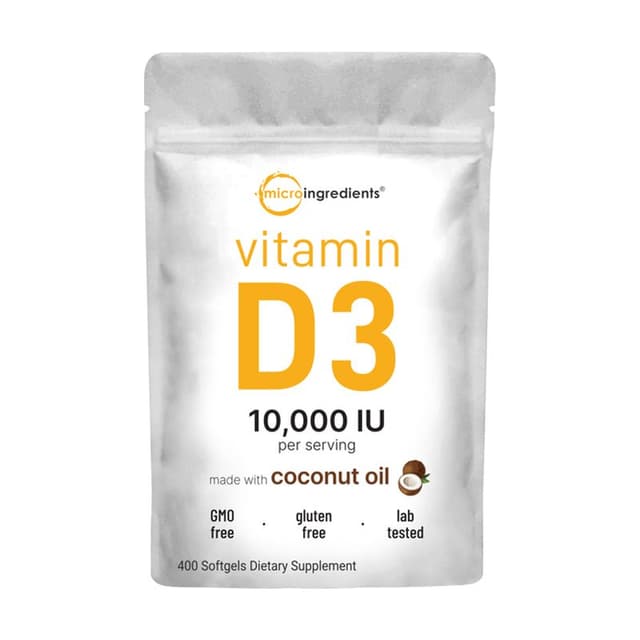
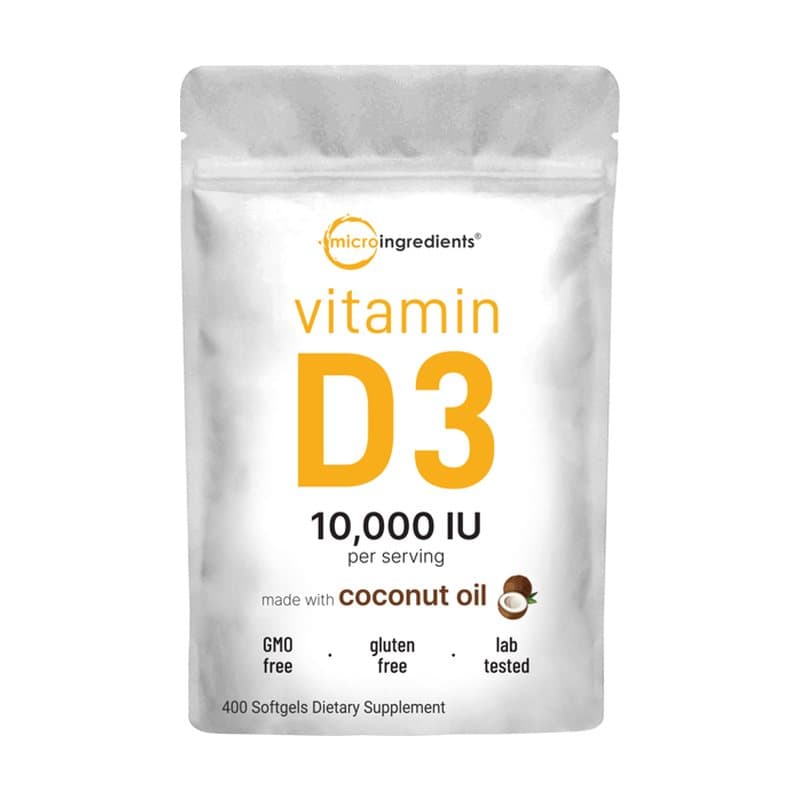
| Micro Ingredients Vitamin D3 10,000 IU · 400 Softgels | Micro Ingredients | $0.011 | 88% less |
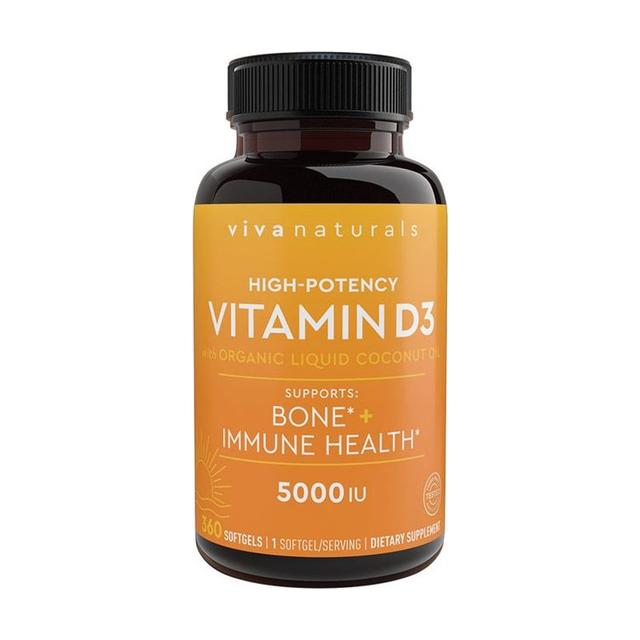
| Viva Naturals Vitamin D3 · 360 Softgels | Viva Naturals | $0.011 | 88% less |
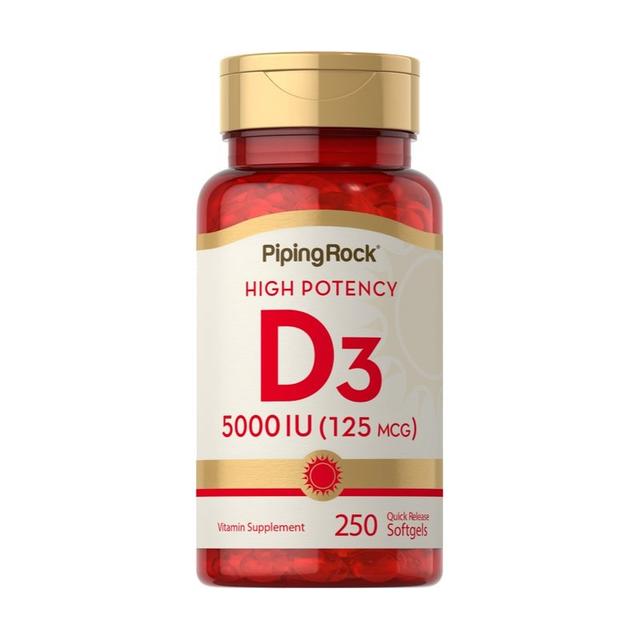
| Piping Rock High Potency Vitamin D3 · 5000 IU · 250 Quick Release Softgels | Piping Rock | $0.015 | 84% less |
| Nature Made Vitamin D3 2000 IU Softgels · 250 softgels popular brand | Nature Made | $0.095 | — |
Prices checked November 7, 2026. Store prices change; the price at checkout is final. See the full vitamin d3 list
To judge a combo, work out its price per 2,000 IU of D3 the same way: price divided by the number of 2,000 IU servings in the bottle. Whatever it costs above plain D3 is what you are paying for the K2. Then check the K2 line on the Supplement Facts panel: the form (MK-7 or MK-4) and the dose in mcg. For reference, the trials above used 180 mcg and 375 mcg of MK-7 a day. How it works explains how we price per serving.
For D3 dosing itself, see vitamin D3: 2,000 or 5,000 IU? and best vitamin D3 in 2026. If you are new to label math, how to read a supplement facts label covers the basics.
Who might still consider K2
Some people take K2 because they eat few leafy greens or fermented foods, or because a doctor suggested it. That is a personal call, not something the trials settle. If you do, a separate K2 product lets you set the D3 and K2 doses yourself, and food sources such as leafy greens raise vitamin K intake for very little money.
Frequently asked questions
Do I need to take K2 with vitamin D3?
It is not required for most people. Trials of MK-7 for bone density are mixed, and the 3-year trial that added MK-7 to vitamin D and calcium found no difference in bone density.
What does vitamin K2 do?
Vitamin K activates proteins that bind calcium, including osteocalcin in bone. K2 (menaquinones) is one form, found in natto (fermented soybeans) and in modest amounts in meat, dairy and eggs.
Can I take D3 and K2 if I'm on blood thinners?
If you take warfarin or a similar vitamin K antagonist, do not start any vitamin K supplement without your doctor. A change in vitamin K intake can raise or lower the drug's effect.
Is there an upper limit for vitamin K?
No upper limit has been set, because no adverse effects from vitamin K in food or supplements have been reported. The warfarin interaction is the main safety concern.
How much K2 did the studies use?
The two 3-year MK-7 trials used 180 mcg and 375 mcg a day. Check the K2 form and dose on any combo's Supplement Facts panel.
Sources
- NIH Office of Dietary Supplements: Vitamin K fact sheet (opens in a new tab)
- Three-year low-dose menaquinone-7 supplementation helps decrease bone loss in healthy postmenopausal women (Knapen et al., Osteoporosis International, 2013) (opens in a new tab)
- The effect of vitamin MK-7 on bone mineral density and microarchitecture in postmenopausal women with osteopenia: a 3-year randomized, placebo-controlled trial (Rønn et al., Osteoporosis International, 2021) (opens in a new tab)
- NIH Office of Dietary Supplements: Vitamin D fact sheet (opens in a new tab)
Every price on the list is worked out the same way, and checked daily.
See the vitamin D3 price comparisonCheaper alternatives to Nature Made vitamin D3Nature Made vs Micro Ingredients vitamin D3
This is general information about prices and labels, not medical advice. Ask a doctor or pharmacist before starting a supplement, especially if you are pregnant, take medication, or have a health condition. These statements have not been evaluated by the Food and Drug Administration, and no supplement here is intended to diagnose, treat, cure, or prevent any disease. We don't sell the products; how we make money.